U.S. President Donald Trump said he is considering signing an executive order to reclassify marijuana as a less dangerous drug, though he offered no timeline for the move.
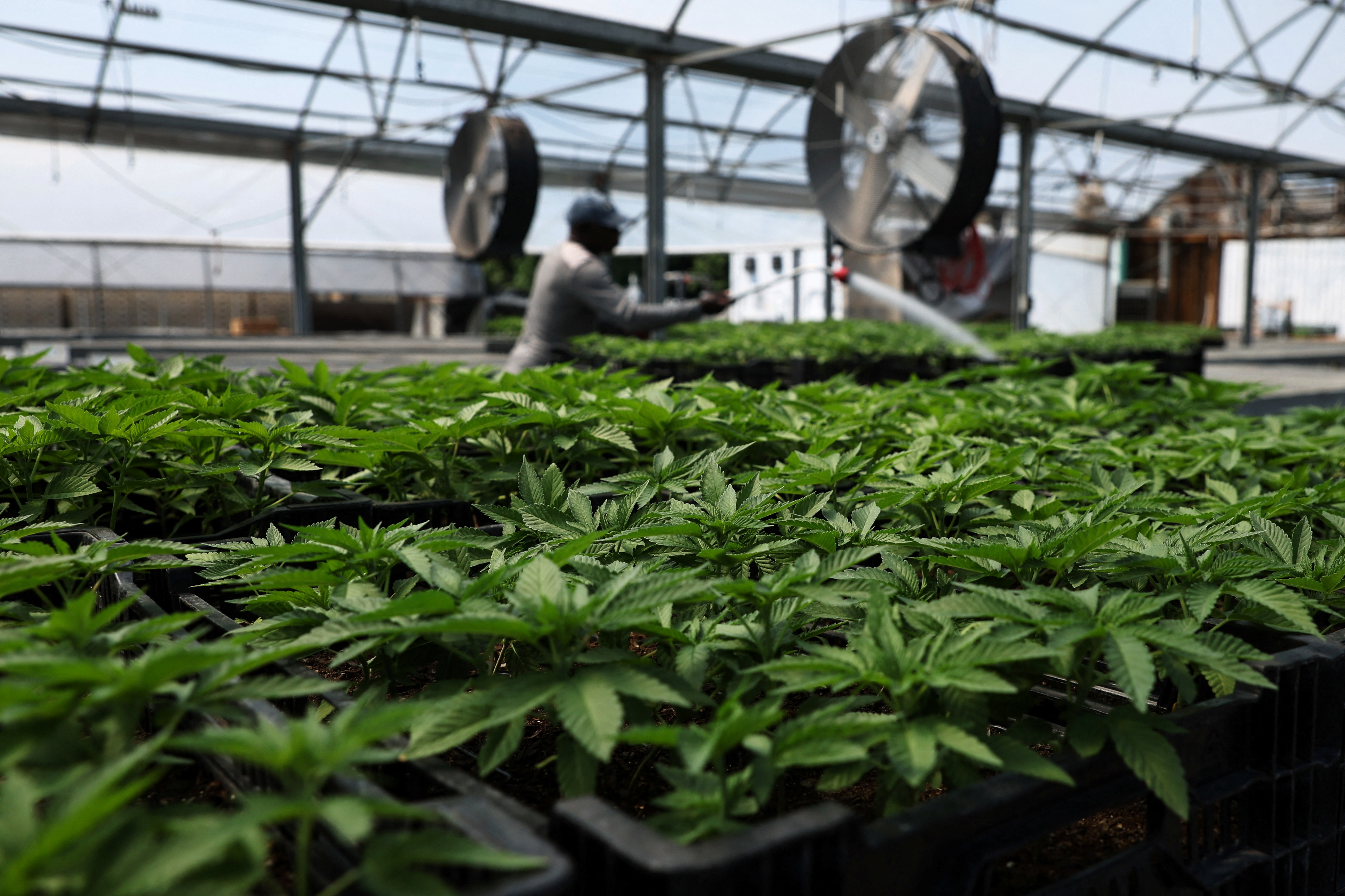
A reclassification could ease criminal penalties and reshape the pot industry by lowering tax burdens and making it easier for firms to secure funding.
Trump had been expected to issue an executive order as soon as Monday, according to media reports last week.
U.S.-listed cannabis-linked stocks such as Canopy Growth (WEED.TO), . Organigram Global (OGI.TO), SNDL (SNDL.CD), Aurora Cannabis , Trulieve Cannabis (TRUL.CD) and Tilray Brands closed down between 4% and 13%.
The stocks, however, remain above the levels they were at when news of the possible reclassification broke last week.
Here is what such a move could mean for companies.
Under the U.S. Controlled Substances Act, marijuana is listed as a Schedule I substance, such as heroin, meaning it has a high potential for abuse and no current accepted medical use.
Last year, the Biden administration asked the Department of Health and Human Services to review marijuana's classification, and the agency recommended moving it to Schedule III, a category for substances with a moderate to low risk of physical or psychological dependence, such as steroids.
The Drug Enforcement Administration must review the recommendation and decide on the reclassification.
One of the biggest benefits of a reclassification would be that cannabis firms would no longer be subject to Section 280E of the U.S. federal tax code.
That provision prevents businesses dealing in Schedule I and II controlled substances from claiming tax credits and deductions for business expenses.
Class III classification could unlock banking access for pot producers, attract institutional investors, reduce taxes, and spur mergers and acquisitions.
Securing funding remains one of the biggest challenges for cannabis producers, as federal restrictions keep most banks and institutional investors out of the sector, forcing pot producers to turn to costly loans or alternative lenders.
Congress has also been debating further action for some time. The Secure and Fair Enforcement Regulation Banking Act (SAFER) bill, introduced in 2023, would ensure that all businesses, including state-sanctioned cannabis businesses, will have access to deposit accounts, insurance, and other financial services.
TD Cowen analysts had said full legalization remains unlikely, citing a lack of meaningful support in Congress and limits on how far the Drug Enforcement Administration (DEA) can go through rescheduling alone.
They said it is more likely that Trump will revive the reclassification effort, which would allow the government to regulate it.
Some analysts, however, say a reclassification will not change much.
Cannabis will remain federally illegal, interstate trade will not be allowed, and the silo system of each state deciding its own market rules will still apply, according to equity research firm Zuanic & Associates.
关注我们