Everything Mike Dolan and the ROI team are excited to read, watch and listen to over the weekend.
From the Editor
Hello Morning Bid readers!
In this topsy turvy week, we saw a landslide election win in Japan, a creeping extension of the artificial intelligence disruption trade, a pushback on President Donald Trump’s tariff agenda and a mix of U.S. economic data that jostled rates markets. Put it all together, and it suggests that the market outlook on everything from technology to the “Takaichi trade” is clear as mud.
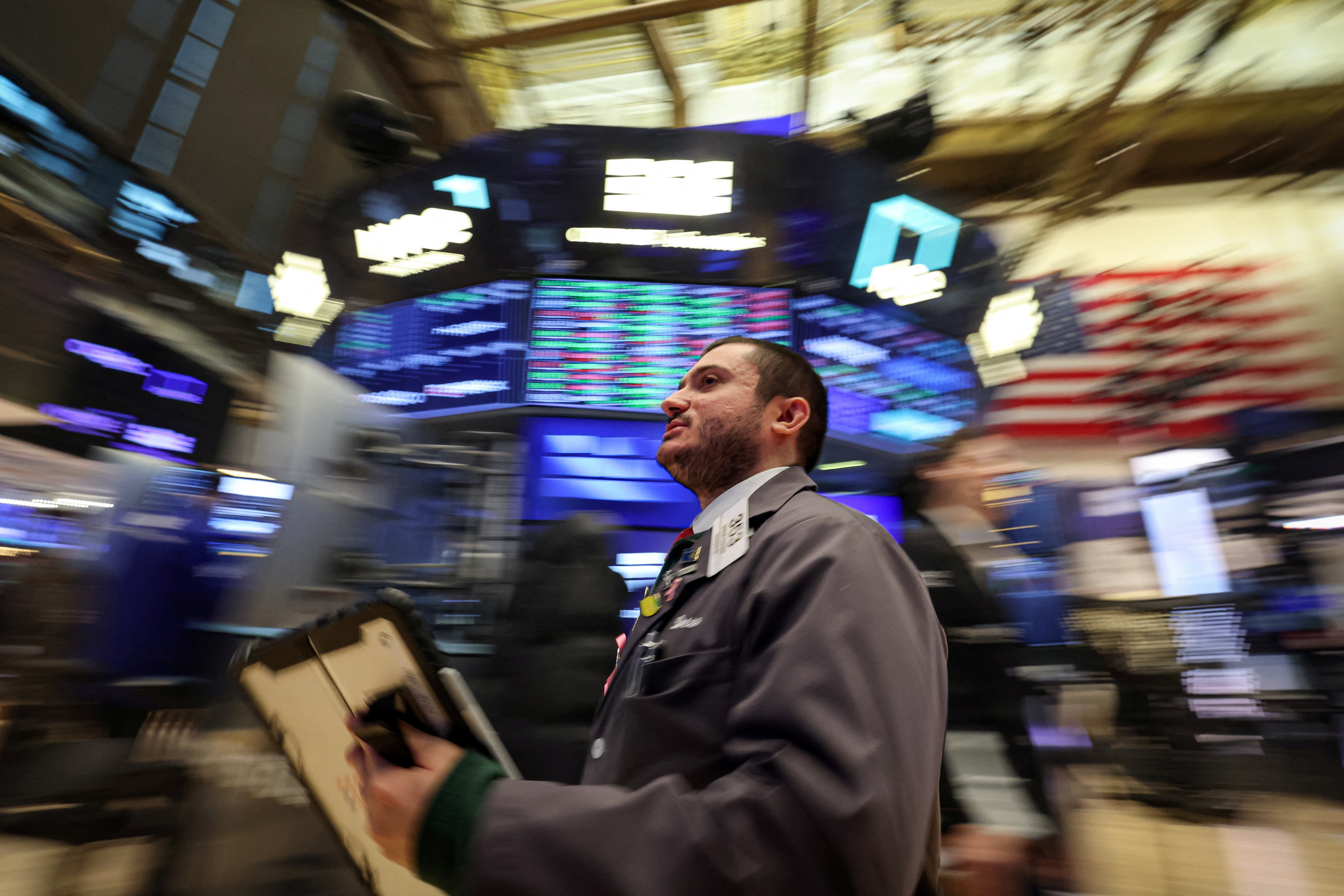
Tech stocks took it on the chin on Thursday, with the Nasdaq Composite dropping 2% following disappointing earnings from Cisco Systems. Apple also recorded a 5% drop yesterday, its biggest since the swoon following last April’s ‘Liberation Day’ tariff announcement. And transportation stocks were the latest victim of the AI disruption trade.
But the marquee event of the week remains the epic win for Japanese Prime Minister Sanae Takaichi, whose Liberal Democratic Party secured a supermajority in lower house elections over the weekend.
Japanese stocks soared on the news, with the Nikkei eclipsing 58,000 for the first time on Thursday. Japanese government bonds (JGBs) and the yen – two markets that had been roiled for months by Takaichi's planned fiscal largesse – also strengthened, with the latter on track for its largest weekly gain in more than a year.
Investors may be betting that Takaichi’s mandate will give her the leeway to be more fiscally responsible, but the move may also reflect technical issues and the fact that a lot of negative sentiment was already priced in.
Either way, investors should not to be lulled into complacency by this post-election euphoria, as the yen and JGBs could get rattled again as details of the funding plans for the prime minister’s spending emerge.
The resurgent yen put downward pressure on the dollar this week, though the greenback did catch a bid on Thursday amid the push into safer assets. The dollar’s persistent weakness against the euro and yuan over the past year remains notable, as it seems well aligned with recent statements from leaders in both regions about ambitions for their currencies to play bigger global roles.
Meanwhile, expectations for Federal Reserve interest rate cuts were jostled this week by a somewhat surprising mix of U.S. economic data.
First, the release of weaker-than-expected December retail sales on Tuesday caused Fed easing expectations to rise, putting the odds of an April rate cut near 50-50.
But that was reversed on Wednesday with the release of January jobs numbers that surprised on the upside. Nonfarm payrolls increased by 130,000 last month, almost twice the consensus forecast, though this was concentrated in healthcare and social assistance and came along with massive downward revisions for 2025.
Overall, the data suggest that the labor market may be stabilizing. So why is the Fed expected to continue easing, especially with inflation above the Fed’s 2.0% target and signals emerging that economic activity could be heating up globally?
Indeed, governments around the world are expected to loosen their purse strings this year, despite massive debt burdens (a pretty negative sign for bonds), while tech titans are going on a capex binge, with $650 billion planned for 2026 among just four of them.
None of that seems like a recipe for lower interest rates – even if President Trump has called for U.S. borrowing costs to be “the lowest in the world.” And this all raises the question of what would actually have to happen for the Fed to consider changing course.
Inflation is obviously a large part of that equation, and investors will be looking closely at the latest CPI data due out later today.
Over in energy markets, oil prices were rangebound this week, moving around slightly on news about U.S.-Iran negotiations, though the outcome of Israeli Prime Minister Benjamin Netanyahu’s visit with Trump suggested that talks with Tehran will continue.
On Thursday, the International Energy Agency said that it expects global oil demand this year to increase more slowly than previously forecast, supporting their projections for a significant supply glut.
That might not jibe with Brent crude stuck near $70 a barrel, but the oil market is increasingly being influenced by external, unpredictable forces, raising doubts about how accurately prices reflect physical fundamentals.
It’s one more indication of how supposedly hyper-efficient global markets may struggle to navigate the twists and turns of 2026 – just like the rest of us.
For more commodities and markets news, check out Reuters Open Interest. Learn why investors may need a new hedging playbook, why skimpy snow may boost Europe’s natural gas demand this year, and why WeChat and Reddit are playing a role in the latest metals boom.
As we head into the weekend, check out the ROI team’s recommendations for what you should read, listen to, and watch to stay informed and ready for the week ahead.
I’d love to hear from you, so please reach out to me at [email protected].
This weekend, we're reading...
MIKE DOLAN, ROI Editor at Large: The latest book from Cornell Professor and former IMF economist Eswar Prasad, The Doom Loop, unpacks the implications of rolling back decades of globalization and multilateralism. He discusses the mistakes that led to this situation and possible remedies to make sure that a destructive 'doom loop' doesn't spiral out of control.
RON BOUSSO, ROI Energy Columnist: Alex von Tunzelmann’s Blood and Sandtells the tale of the 1956 Suez Crisis and the Hungarian uprising that unfolded simultaneously, with enormous global consequences. It was fascinating to read about the importance of oil in Britain’s decision-making in the Suez Crisis.
JAMIE MCGEEVER, ROI Markets Columnist: The Brookings Institution’s Ben Harris asks why the U.S. economy continues to grow even as policymakers pursue an agenda that goes against mainstream economists' views. He provides four likely answers: recent shocks aren’t as large as first thought; shocks have been offset by other stimuli; shocks haven’t moved through the system yet; or economic models are simply wrong.
ANDY HOME, ROI Metals Columnist: The latest in a series of deep dives into critical metals by RFC Ambrian researchers is on rare earths, and it is a great primer on production and consumption.
GAVIN MAGUIRE, ROI Global Energy Transition Columnist: This brief report details a U.S. public utility commissioner’s recent visit to several clean energy and grid equipment factories in China. Her team visited production lines for EVs, batteries, solar panels and utility-scale transformers, and came away with some interesting observations.
CLYDE RUSSELL, ROI Asia Commodities and Energy Columnist: One notable feature of the Mining Indaba conference this year was the optimism over the future of mining on the continent as major powers are once again scrambling to access the continent's resources. Finding articles backing and supporting this bullish view is easy. Finding a well-argued counterpoint, not so much. But here’s one from the feisty and independent Daily Maverick.
We're listening to...
ANNA SZYMANSKI, ROI Editor in Charge: Just in time for Valentine’s Day, check out the latest episode of the Reuters Econ World podcast on dating apps. Host Carmel Crimmins digs into the multibillion‑dollar business of online love - how apps keep you swiping, why Gen Z is pulling back, and whether AI could rewrite the entire model.
And we're watching...
JAMIE MCGEEVER, ROI Markets Columnist: Riffing off Mike’s suggestion above, I’m recommending Reuters Breakingviews editor Peter Thal Larsen’s recent interview with Eswar Prasad, author of The Doom Loop. Prasad explains why the world’s economic and political structures are crumbling and how they can be rebuilt. Hint: not easily.
Want to receive the Morning Bid in your inbox every weekday morning? Sign up for the newsletter here. You can find ROI on the Reuters website, and you can follow us on LinkedIn and X.
Opinions expressed are those of the authors. They do not reflect the views of Reuters News, which, under the Trust Principles, is committed to integrity, independence, and freedom from bias.
关注我们