What matters in U.S. and global markets today
By Mike Dolan, Editor-At-Large, Finance and Markets
It’s fair to say financial markets are just as confused about U.S. trade policy as foreign leaders who are now left questioning which tariffs apply to their goods, for how long, and under what authority.
Initial relief from Friday's Supreme Court ruling against President Trump's use of emergency legislation for tariffs has given way to renewed uncertainty as Trump pursues fresh levies.
I’ll get into that and more below.
But first, listen to the latest episode of the Morning Bid daily podcast. Subscribe to hear Reuters journalists discuss the biggest news in markets and finance seven days a week.
Equities initially responded positively to Friday's ruling as traders welcomed the prospect of tariff relief, helping guide U.S. indexes higher and the pan-European STOXX 600 to a record peak at Friday's close.
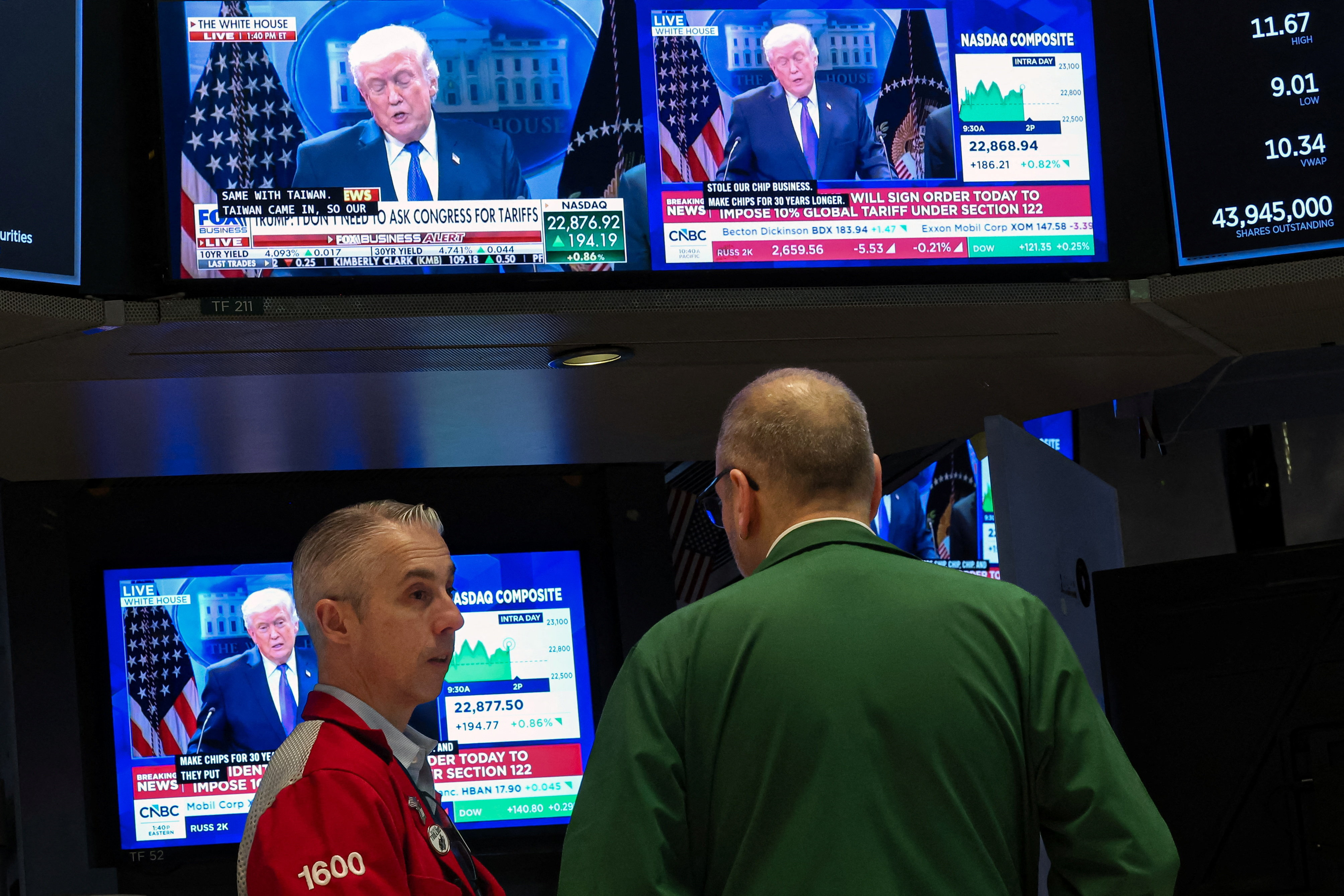
But U.S. stock futures recoiled again on Monday amid Trump's announcement of a new blanket tariff, first of 10% and then 15%, in the wake of the ruling, this time under a hitherto unused law that allows the levies to last a maximum of 150 days before requiring congressional approval.
What happens after July, then, is still up in the air.
In the meantime, lengthy trade investigations are needed to bake in other sectoral tariffs to replace the kiboshed emergency levies over the long term. And many of these will also need congressional approval, upping the ante for the midterm elections where Republicans could lose their House majority.
The trade policy fiasco throws a spanner in the works for many of the bilateral trade deals that Trump sealed on the back of his now neutralized emergency authority.
For China and other countries facing penal tariffs under last year's emergency regime, the new 15% levy is something of a relief. Hong Kong stocks were up more than 2% and South Korea's Kospi rose again on Monday.
But other countries that had negotiated lower tariffs balked at the changes - not least EU countries. The European Commission indicated it would not accept increased tariffs and asserted “a deal is a deal” in reference to the trade pact it agreed with Washington last year.
The dollar fell slightly first thing on Monday and gold prices climbed.
Then there's additional confusion about Treasury revenues and a potential wave of rebates, doubts that are bound to undercut assumptions that tariff income will hit roughly $300 billion this year. This could possibly bury any notion of a new round of stimulus checks to U.S. households and force the Treasury to borrow more bills.
Away from trade, the surprisingly weak U.S. GDP readout for Q4 was offset by elevated PCE inflation readings and suggestions from Atlanta Federal Reserve boss Raphael Bostic that the next move in Fed interest rates could be up.
Oil prices slipped back after the weekend, meantime, as fears of a U.S. strike on Iran over the weekend abated. But the tensions there persist, with another round of Geneva talks scheduled for Thursday and reports suggesting the U.S. military’s planning has reached an advanced stage.
Chart of the day
The U.S. Supreme Court on Friday struck down Donald Trump's sweeping tariffs that he pursued under a law meant for use in national emergencies.
Trump on Friday imposed a 10% temporary tariff instead, even though it expires in July and then requires congressional approval, and ordered the start of new investigations under other statutes. On Saturday he lifted the temporary duty to 15% - the maximum allowed by the law.
Today's events to watch
* U.S. December manufacturers' new orders (10:00 AM EST)
* ECB President Christine Lagarde speaks at awards ceremony in Washington DC
* Fed's Christopher Waller speaks
* Japan markets closed for holiday; final day of China markets closure
Want to receive the Morning Bid in your inbox every weekday morning? Sign up for the newsletter here. You can find ROI on the Reuters website, and you can follow us on LinkedIn and X.
Opinions expressed are those of the author. They do not reflect the views of Reuters News, which, under the Trust Principles, is committed to integrity, independence, and freedom from bias.
关注我们