What matters in U.S. and global markets today
By Mike Dolan, Editor-At-Large, Finance and Markets
President Trump’s 48-hour deadline for Iran to fully open the Strait of Hormuz, which expires on Monday, has sent stocks and bonds plummeting around the world as the Middle East conflict intensifies.
Trump threatened to “obliterate” Iran’s major power plants if Tehran didn’t comply with his demand. Iran said it would retaliate by hitting energy and water plants across the Gulf. We’re now in the fourth week of the war and there’s no sign of de-escalation. Quite the opposite.
I’ll get into that and more below.
But first, listen to the latest episode of the Morning Bid podcast, where I discuss today's global selloff - and the curious disappearance of investors' usual hiding places.
Subscribe to hear Reuters journalists discuss the biggest news in markets and finance seven days a week.
The global Brent crude benchmark passed $113 per barrel on Monday morning, while West Texas Intermediate (WTI) hit $100 before easing back. Average U.S. gas pump prices are now threatening to top $4 per gallon.
Major stock indexes in Asia fell on Monday, with Japan’s Nikkei closing down 3.5%, bringing its March losses to over 12% so far. South Korea’s KOSPI shed nearly 6%, meanwhile, as a trading curb was activated for the fourth time this month.
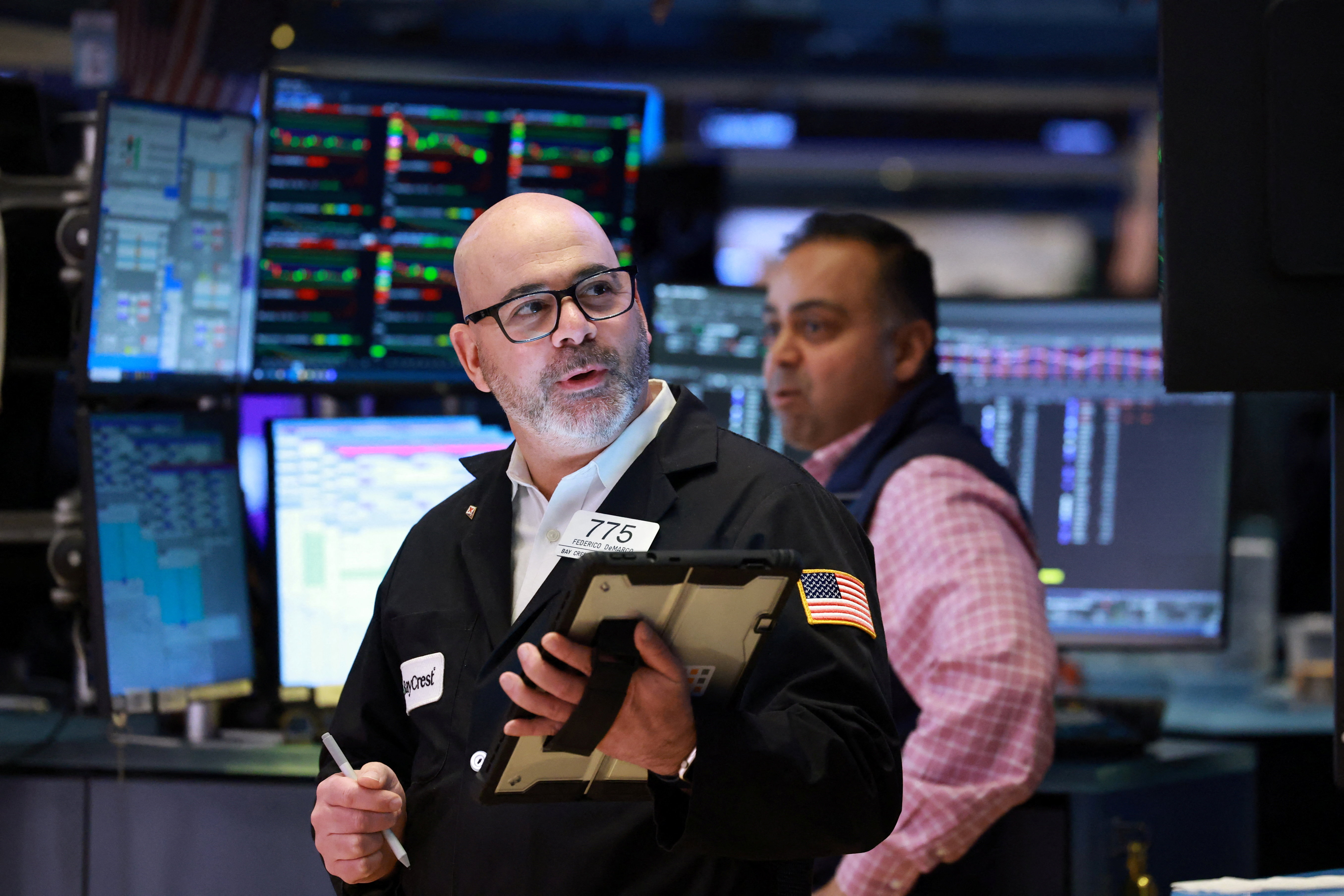
MSCI’s gauge of global equities has now fallen to its lowest point since November 2025. European shares opened lower on Monday morning, with the STOXX 600 falling more than 2% to hit a four-month low. Wall Street futures were in the red ahead of the bell.
At the same time, government bonds have been hit everywhere, extending last week's selloff. Ten-year U.S. Treasury yields rose to their highest levels in nine months, with no additional Fed easing priced into the futures curve this year. In fact, Fed futures now see a 75% chance of a rate rise by year end.
And wary of the potential outsized inflation impact from the energy shock, money markets now also see three interest rate rises from both the European Central Bank and Bank of England for the rest of the year.
Not only are bonds not providing a safe harbour, but gold continues to slide too, leaving cash looking like the only option for many. The dollar edged up against a basket of major currencies.
Meantime, the Japanese government signalled its preparedness to intervene to tackle foreign exchange volatility as the yen edged closer to the $160 threshold. The embattled currency has failed to stage a rebound despite recent hawkish remarks from Bank of Japan Governor Kazuo Ueda.
Returning to energy, additional upward pressure on prices seems almost guaranteed amid the escalating threats and attacks in the Middle East, even as the International Energy Agency mulls the release of more stockpiled oil. These releases will happen “if necessary”, said IEA chief Fatih Birol, who added that opening Hormuz remained the only real solution.
Chart of the day
Gold dove more than 8% on Monday to hit its lowest level of the year, after logging its biggest weekly loss in about 43 years last week. That came as the escalating Middle East conflict stoked speculation of higher global interest rates to choke off the inflationary impact of an energy price shock.
Failing in the moment as a war hedge and inflation buffer, gold appears to be suffering from a reversal of last year's speculative frenzy as investors look to cash up their best performing assets.
Today's events to watch
* EU March flash consumer confidence (11:00 AM EDT)
* EU's Ursula von der Leyen begins a three-day visit to Australia
Want to receive the Morning Bid in your inbox every weekday morning? Sign up for the newsletter here. You can find ROI on the Reuters website, and you can follow us on LinkedIn and X.
Opinions expressed are those of the author. They do not reflect the views of Reuters News, which, under the Trust Principles, is committed to integrity, independence, and freedom from bias.
关注我们