Asian shares rallied on Wednesday as oil prices paused their gains, with markets turning to the U.S. Federal Reserve meeting to see how policymakers will balance growth and inflation risks amid ongoing geopolitical tensions in the Middle East.
Israel intensified its offensive by killing Iran's security chief, while Iran renewed its strikes on oil facilities in the United Arab Emirates. A senior Iranian official said the new supreme leader rejected de-escalation offers conveyed by intermediaries, signalling no quick end to a war that has unleashed a global oil shock.
Oil prices took a breather on Wednesday from recent gains though the Strait of Hormuz remained largely shut. Brent crude futures dropped 1% to $102.28 a barrel, while U.S. West Texas Intermediate crude fell 1.6%.
That is proving to be a comfort for equity investors, with MSCI's broadest index of Asia-Pacific shares outside Japan (.MIAPJ0000PUS) up 1.2%. Japan's Nikkei (.N225) rallied 2%.
Chinese blue-chips (.CSI300) inched up 0.1% while Hong Kong's Hang Seng index (.HSI) rose 0.3%.
Natasha Kaneva, head of global commodities research at JPMorgan, said the apparent stability in Brent and WTI reflects a temporary buffer created by regional inventory overhangs, benchmark composition and policy interventions.
"If the Strait does not reopen...Brent and WTI will ultimately reprice higher as Atlantic basin inventories are drawn down and the global market is forced to clear at a materially tighter supply level," she said.
The United Arab Emirates may join a U.S.-led effort to protect shipping in the Strait of Hormuz, but several Western countries have already rebuffed calls from U.S. President Donald Trump to send warships to escort oil tankers in the region.
Both S&P 500 futures and Nasdaq futures inched up 0.2% after Wall Street gained overnight, supported by expectations of strong earnings from chipmaker Micron Technology (MU.O). Investors will be watching out for commentary on chip shortages and pricing from its results due later on Wednesday.
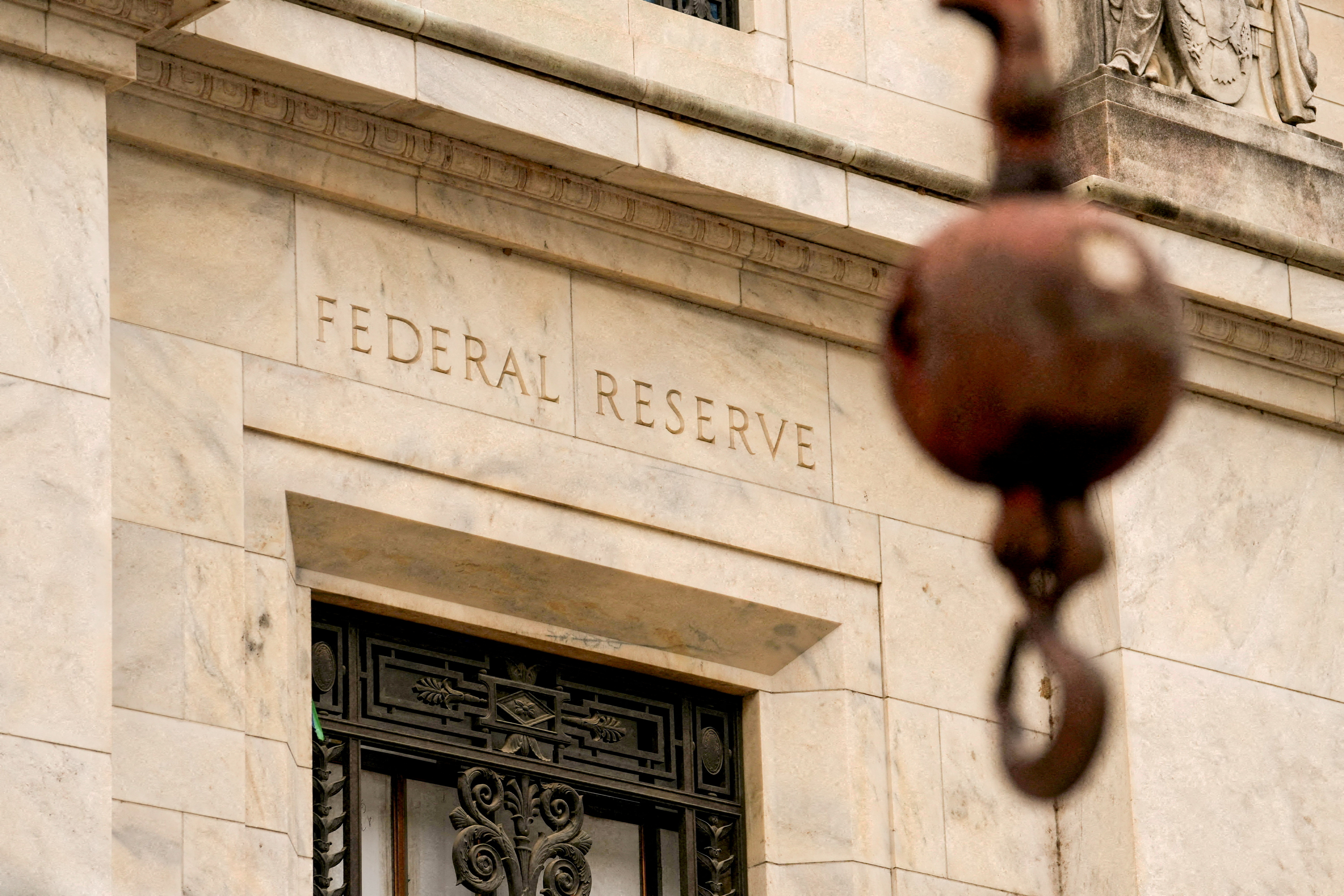
After the Reserve Bank of Australia kicked off a busy week for global central banks with a rate hike, all eyes are now on the Fed's policy meeting later in the day. Attention will be on its updated economic forecasts, especially the "dot plot," where the risk is it might no longer project any rate cuts at all this year.
The Fed is widely expected to keep its policy steady but the debate will very much centre on whether the Iran conflict is more likely to disrupt economic growth, threaten more persistent inflation or create a confounding mix of economic slowing and rising prices.
Fed Chair Jerome Powell, who is due to step down in May, will also hold a press conference, and markets will be watching for any hint on whether he intends to remain on the Board as a governor once his term as the chair ends.
"Consensus still points to the median dot plot showing one 25-basis-point cut for 2026, aligning with current market pricing," said Tony Sycamore, analyst at IG.
"That said, there's a decent chance the dots could shift more hawkish, perhaps even to zero cuts, if the committee views the oil shock as leading to stickier inflation."
The Bank of Canada also meets later on Wednesday where no policy change is expected. Markets are wagering the next move will be up, with one rate hike fully priced in by the year-end.
In currency markets, the U.S. dollar was on the back foot with the euro holding at $1.1539, after rising 0.3% overnight.
The Japanese yen steadied at 159 per dollar, having gained for two straight days to move away from the 160 level that has triggered official intervention in the past.
Treasuries bounced a little overnight, helped by a solid auction of 20-year Treasury bonds. Yields on 10-year Treasury notes were flat at 4.2024%, having declined 2 basis points overnight.
关注我们