The yen surged on Tuesday, while Asian markets struggled for direction as a mixed batch of regional economic data and fresh Iranian threats in the Persian Gulf drove oil prices and bond yields higher.
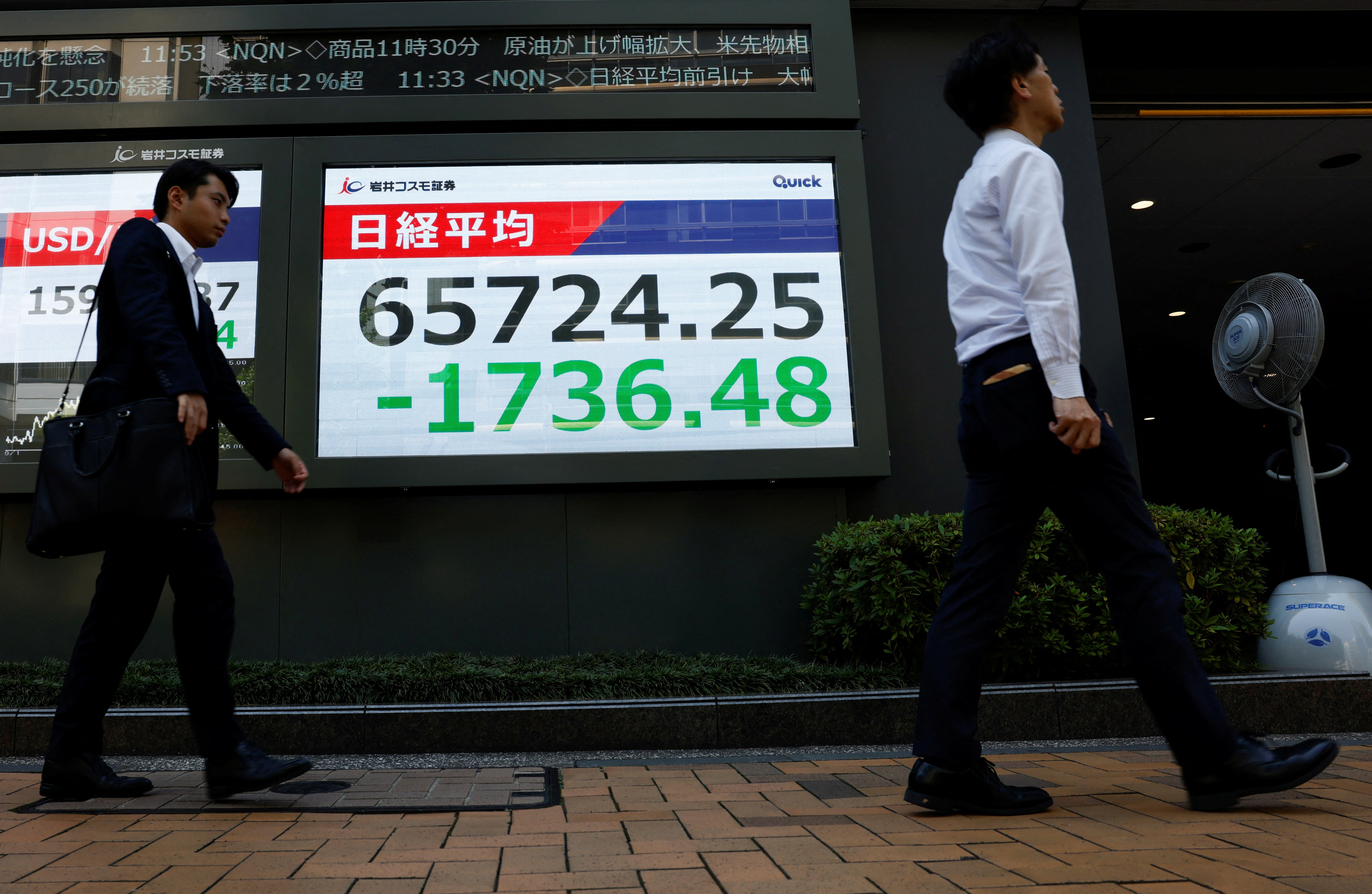
Japan's Nikkei 225 (.N225) fluctuated between gains and losses before edging up 0.2%, as the yen jumped as much as 0.6% to 153.51, its strongest level since February 18.
MSCI's broadest index of Asia-Pacific shares outside Japan (.MISX00000PUS) was up 0.2%, led by a 1.2% gain in the KOSPI (.KS11). S&P 500 e-mini futures were down 0.1% after a holiday in the U.S. on Monday.
"While U.S. Labor Day made for a somewhat quieter start to the week for trading volumes, the weekend’s tit-for-tat strikes between the U.S. and Iran continued to put upward pressure on oil prices, acting as a drag on risk sentiment more broadly," Westpac analysts said.
Oil prices moved higher for a third day as trading resumed in Asia, with Brent crude futures edging up 0.04% to $97.04 a barrel, after hitting a six-week high on Monday after Iran threatened to retaliate against any new attacks by targeting energy infrastructure across the Gulf, including U.S. oil and gas interests.
The yield on the U.S. 10-year Treasury bond was up 0.6 basis points at 4.788%. Traders are still pricing an implied 60% probability of a 25-basis-points hike at its next two-day meeting on September 16, according to the CME Group's FedWatch tool, about the same chance as a week ago.
The U.S. dollar index , which measures the greenback's strength against a basket of six currencies, was trading around a two-week low of 98.82.
On the broader economic front, the growth picture appeared mixed as data released Tuesday blew hot and cold.
Japan's economy grew faster than initially estimated in the April-June quarter from the previous three months, supported by business spending, revised data showed on Tuesday, but the figure still lagged analysts' forecasts.
Meanwhile, data showed Japanese real wages rose 2.4% in July from a year earlier, marking the biggest increase since May 2021.
"With wage growth going from strength to strength, the case for the Bank of Japan to hasten the pace of tightening is becoming increasingly compelling," Capital Economics analysts wrote in a research report.
Over in Australia, shares (.AXJO) slumped 0.6% after a measure of local consumer sentiment fell sharply in September.
Gold was up 0.5% at $4,428.23, while in cryptocurrencies, bitcoin nudged 0.1% higher to $79,333.01, while ether climbed 0.2% to $2,498.94.
关注我们